Playtime is often viewed as a delightful escape, a time for children to let their imaginations run wild and explore the world around them.
However, playtime can also serve as an invaluable tool for supporting a child’s understanding of math concepts.
By integrating playful activities into learning, we can create a nurturing environment where children not only grasp mathematical ideas but also develop a love for numbers.
The beauty of using play to enhance math understanding lies in its natural, engaging qualities. Children are inherently curious, and their desire to explore can be harnessed to introduce mathematical concepts in a way that feels effortless and enjoyable. Rather than presenting math as a series of challenges or abstract problems, play can transform learning into a fun adventure filled with discovery.
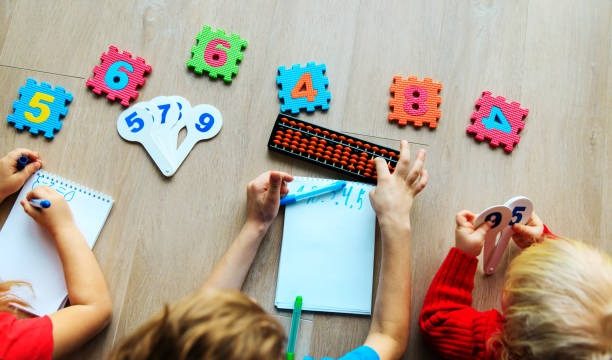
A gentle introduction to numbers can begin with simple games that involve counting. For instance, playing with building blocks offers a tactile experience where children can physically manipulate objects while counting them. As they stack blocks or create structures, they are not only practicing their counting skills but also developing spatial awareness. This hands-on approach allows them to visualize numbers and understand quantities in a concrete way.
As children grow, their play can evolve to include more complex mathematical concepts. Board games often incorporate elements of strategy and probability, subtly introducing children to critical thinking skills. Games that involve rolling dice, moving pieces a certain number of spaces, or collecting items based on chance can spark discussions about addition, subtraction, and even basic statistics. In these moments, children are not just playing; they are engaging with math in a context that feels relevant and exciting.
Exploring the outdoors can also be a wonderful way to reinforce mathematical thinking. Nature provides endless opportunities for children to observe patterns, measure distances, and collect data. For example, a walk in the park can turn into a mini math expedition where children count the number of trees, measure the length of shadows, or even estimate the height of a hill. By connecting math to their surroundings, children see its practical applications, which can deepen their understanding and appreciation for the subject.
Artistic endeavors can further enhance math comprehension. Creating art projects that involve symmetry, shapes, and patterns allows children to express their creativity while simultaneously engaging with mathematical concepts. Whether they are drawing, painting, or crafting, children can experiment with geometric shapes, explore ratios, and even delve into basic fractions when dividing their materials. This intersection of art and math fosters an environment where both subjects complement each other, making learning a holistic experience.
Incorporating everyday activities into playtime can also be a fantastic way to support math understanding. Cooking, for instance, is an enjoyable and practical way to teach measurement and fractions. When children help in the kitchen, they can measure ingredients, discuss the concepts of half and whole, and even explore time management by following a recipe. These experiences not only build mathematical skills but also instill a sense of responsibility and accomplishment.
A small shift toward balance can also be found in the way we approach technology. While there is a wealth of educational apps and games available that focus on math skills, it’s vital to strike a balance between screen time and physical play. Interactive apps can certainly enhance learning, but they should complement, not replace, hands-on experiences. Engaging in both digital and analog play ensures that children benefit from a diverse range of learning opportunities.
As parents and caregivers, we can play an essential role in facilitating these enriching experiences. By creating a supportive environment that encourages exploration and curiosity, we can help children feel comfortable experimenting with numbers. This might mean asking open-ended questions during play, allowing them to lead the way in their learning, or simply sharing our own enthusiasm for math. When children see adults engaging with math in everyday life, they are more likely to view it as a valuable and enjoyable part of their own experiences.
It’s also important to remember that every child learns differently. Some may thrive in structured activities, while others may prefer free play. Observing how your child interacts with various types of play can provide insights into their learning style and preferences. Adapting the approach to suit their needs can lead to a more meaningful and effective learning experience.
As we guide children through their mathematical journey, it’s essential to celebrate their progress, no matter how small. Recognizing their efforts and achievements fosters a positive attitude toward learning. When children feel supported and encouraged, they are more likely to take risks, ask questions, and explore new concepts without fear of failure.
Incorporating playtime into math learning is not just about teaching numbers and equations; it’s about nurturing a lifelong love for learning. By embracing the playful spirit that comes naturally to children, we can create an environment where math becomes an enjoyable part of their everyday lives. Through games, exploration, creativity, and everyday activities, we can help children build a strong foundation in math that will serve them well into the future.
In conclusion, using playtime to support math understanding is a beautiful approach that aligns with children’s natural inclinations. By weaving math concepts into play, we can cultivate a sense of curiosity and joy in learning. As we foster this playful exploration, we not only help children grasp mathematical ideas but also inspire them to embrace the wonders of learning throughout their lives.