Supporting Early Math With Gentle Guidance
When we think about nurturing a child’s development, we often envision moments filled with colorful blocks, playful songs, and imaginative stories.
Yet, nestled within these joyful experiences is another essential aspect of growth: early math skills.
Supporting a child’s journey into the world of numbers and shapes can be a delightful adventure, one that can be approached with gentle guidance and a nurturing spirit.
Creating a warm space for exploration
The foundation for early math learning begins at home, in an environment that encourages curiosity and exploration. Children thrive when they feel secure and supported, and creating a warm space for them to interact with math concepts can be incredibly beneficial. This doesn’t mean setting up a formal classroom or strictly adhering to a curriculum; rather, it’s about weaving math into the fabric of everyday life.
Consider your daily routines. Whether you’re cooking together, shopping for groceries, or playing outside, there are countless opportunities to introduce mathematical concepts naturally. For instance, while preparing a meal, you might ask your child to help measure ingredients, introducing them to concepts of volume and quantity in a hands-on way. Such activities allow children to see math as a part of life, rather than a separate or daunting subject.
Encouraging playful exploration
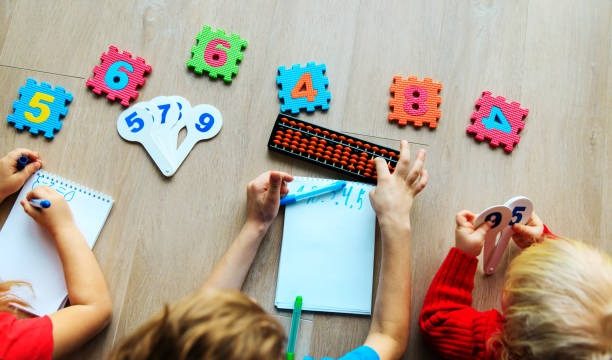
Play is one of the most powerful tools in a child’s learning toolkit. When children engage in play, they are not only having fun but also developing critical thinking skills, problem-solving abilities, and foundational math concepts. Simple games that involve counting, sorting, or pattern recognition can foster a love for math without the pressure of traditional learning.
Consider setting aside time for activities like building with blocks. As children stack and arrange, they are unknowingly practicing spatial awareness and understanding concepts of balance and gravity. Similarly, outdoor activities such as collecting leaves or rocks can turn into delightful math lessons. Counting the items they find or grouping them by size or color can help children grasp basic mathematical principles while enjoying the wonders of nature.
A gentle approach to problem-solving
As children begin to encounter challenges, it’s important to adopt a gentle approach to problem-solving. Instead of immediately providing answers, encourage them to think through the problem. Phrasing questions in a way that prompts reflection can be incredibly effective. For example, if a child struggles to figure out how many more blocks they need to complete a tower, you might ask, “What do you think we should do next?” This not only helps them develop critical thinking skills but also builds their confidence in tackling challenges.
It’s essential to remember that mistakes are a natural part of the learning process. Rather than viewing errors as setbacks, frame them as opportunities for growth and discovery. By modeling a positive attitude toward mistakes, you help children understand that learning is a journey filled with ups and downs.
Finding joy in numbers
One of the most beautiful aspects of early math learning is the opportunity to infuse joy into the process. Music, rhythm, and movement can all serve as engaging ways to explore mathematical concepts. Singing songs that incorporate counting or rhythm can make numbers feel lively and fun. Consider clapping hands to a beat while counting out loud, or creating a simple dance that involves moving in patterns. These playful interactions can help children associate math with happiness and creativity.
Books can also play a vital role in this journey. There is a treasure trove of children’s literature that introduces math concepts in a captivating way. Stories that involve counting, shapes, or patterns can spark a child’s imagination while reinforcing their understanding of math. Reading together and discussing the mathematical elements in the story can deepen their comprehension and appreciation for numbers.
Building a supportive community
As parents and caregivers, it’s important to recognize that we are not alone in this journey. Building a supportive community can enhance the early math experience for children. Connecting with other families, sharing ideas, and exchanging resources can provide fresh inspiration. Playdates that incorporate math-related activities can create a rich environment for learning, where children can explore together and learn from one another.
Consider joining local groups or online communities focused on early childhood education. Engaging with like-minded individuals can offer valuable insights and encouragement. Through shared experiences, you can discover new ways to incorporate math into daily life, making it a collective adventure rather than a solitary endeavor.
Embracing the journey
Supporting early math skills is not about rushing to meet milestones or adhering to rigid standards. Instead, it’s about embracing the journey and allowing children to explore at their own pace. Each child is unique, and their relationship with numbers will develop in its own time. By providing gentle guidance and a nurturing environment, you can help foster a love for math that will last a lifetime.
As you navigate this path, remember to celebrate small victories. Whether it’s successfully counting to ten, recognizing shapes in the world around them, or simply showing enthusiasm for numbers, each step is a testament to their growth.
In the end, the goal is to instill a sense of wonder and curiosity about math. By creating a space where children feel safe to explore, play, and learn, you are laying the groundwork for a positive relationship with mathematics. With gentle guidance, you can support their early math journey in a way that is both nurturing and enriching, ensuring that their experience with numbers is as joyful as it is educational.