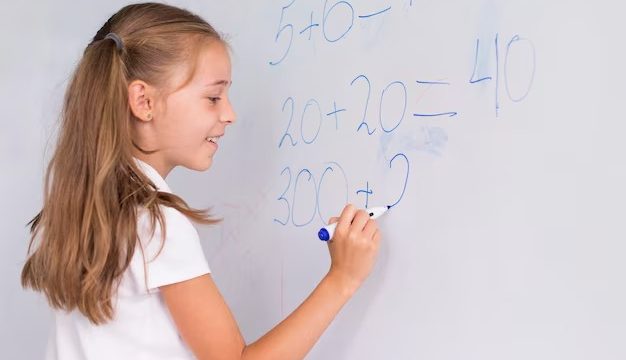
In our everyday lives, we often find ourselves navigating through a world rich with numbers and patterns.
From the way we calculate our grocery bills to the rhythm of our daily routines, mathematics subtly intertwines with our experiences.
But the connection between math and science goes far beyond simple arithmetic; it forms the foundation of how we understand the universe and our place within it.
Math as the Universal Language
At its core, math serves as a universal language, a tool that transcends cultural and linguistic barriers. Whether you are in a bustling city or a remote village, the principles of mathematics remain constant. This universality is particularly evident in the realm of science, where mathematical concepts help articulate theories and ideas that explain natural phenomena. Think of it as a bridge—connecting the abstract world of numbers with the tangible reality of the physical universe.
When scientists formulate hypotheses, they often rely on mathematical models to predict outcomes. For instance, physicists use equations to describe the laws of motion, while biologists might apply statistical methods to analyze population trends. In this way, math not only helps scientists communicate their findings but also allows them to explore the intricacies of the world around us.
The Beauty of Patterns
One of the most enchanting aspects of both math and science is the presence of patterns. In nature, we see these patterns manifested in various forms, such as the symmetry of a snowflake or the spirals of a seashell. Mathematics provides the tools to describe these patterns, offering insight into their underlying structure.
For example, the Fibonacci sequence—a series of numbers where each number is the sum of the two preceding ones—can be found in the arrangement of leaves on a stem or the branching of trees. This connection between mathematics and natural patterns invites us to marvel at the elegance of creation. It encourages a sense of wonder as we begin to recognize the mathematical foundations underlying the beauty of the world.
A Small Shift Toward Balance
In our quest to understand the universe, we often find that math and science lead us toward a deeper comprehension of balance. Take the concept of equilibrium in physics, which describes a state where opposing forces are equal. This idea extends beyond the physical realm and can be applied to various aspects of our lives. Just as scientists seek balance in their experiments, we too can strive for harmony in our daily routines.
Embracing math in our lives doesn’t have to be an intimidating endeavor. Simple activities, such as cooking or gardening, often involve mathematical principles. Measuring ingredients or calculating the area of a garden bed can be a delightful way to engage with numbers while nurturing a sense of accomplishment. By integrating math into our everyday experiences, we can foster a more balanced approach to learning and discovery.
The Role of Curiosity
Curiosity is a powerful catalyst for learning, driving us to explore and question the world around us. It is this same curiosity that fuels scientific inquiry and mathematical exploration. When we allow ourselves to be curious, we open the door to new possibilities and insights. The connection between math and science is not just about formulas and equations; it is also about the thrill of discovery and the joy of understanding.
Encouraging curiosity in ourselves and others can be a rewarding journey. Whether it’s observing the stars on a clear night or experimenting with new recipes in the kitchen, each experience provides an opportunity to engage with math and science in meaningful ways. This exploration can lead to a greater appreciation of the interconnectedness of all things, fostering a sense of wonder that enriches our lives.
Nurturing a Growth Mindset
In the realm of education, fostering a growth mindset can play a crucial role in how we perceive math and science. A growth mindset encourages us to view challenges as opportunities for growth rather than obstacles to overcome. By embracing this mindset, we can approach mathematical concepts with a sense of openness and curiosity, rather than fear or anxiety.
This shift in perspective is particularly important in a world where many people hold misconceptions about their abilities in math. It is common to hear statements like, “I’m just not good at math,” but these beliefs can be transformed through practice and perseverance. By nurturing a growth mindset, we can empower ourselves and others to explore the wonders of math and science without the limitations of self-doubt.
The Journey of Discovery
As we delve deeper into the connection between math and science, we embark on a journey of discovery that enriches our understanding of the world. This journey is not just for scientists or mathematicians; it is for anyone willing to explore the beauty and intricacies of life. By engaging with math in our everyday experiences, we can cultivate a sense of wonder that enhances our appreciation for the universe.
Consider the simple act of observing the changing seasons. Each transition brings with it a unique set of patterns and cycles, from the blooming of flowers in spring to the falling of leaves in autumn. By recognizing the mathematical principles at play in these cycles, we can deepen our connection to nature and gain a greater understanding of the rhythms of life.
In conclusion, the relationship between math and science is a profound and intricate tapestry that weaves together our understanding of the universe. By embracing this connection, we can foster a sense of curiosity, balance, and growth in our lives. Whether we are exploring the beauty of nature, engaging in everyday activities, or nurturing a growth mindset, the principles of math and science invite us to discover the world anew. As we continue our journey, may we find joy in the exploration and connection that lie at the heart of this remarkable relationship.