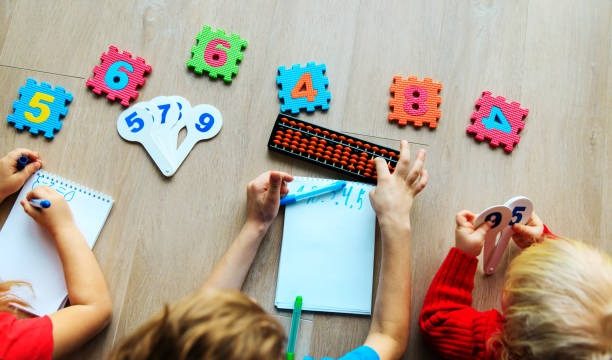
In the world of childhood development, play is often regarded as a powerful tool.
Among its many forms, pretend play stands out as a particularly rich environment for learning, especially when it comes to early math skills.
While many parents might think of math as a subject confined to worksheets and flashcards, the essence of mathematical understanding can be nurtured in the most delightful ways through imaginative play.
When children engage in pretend play, they create scenarios that allow them to experiment with concepts such as counting, measuring, and recognizing patterns—all crucial elements of early math learning. Whether they are setting up a restaurant, playing store, or embarking on a pirate adventure, these playful interactions serve as a backdrop for children to explore mathematical ideas without the pressure of formal instruction.
Imaginative scenarios encourage children to use their creativity, which in turn fosters a sense of curiosity. For instance, when a child pretends to run a bakery, they may start counting items, measuring ingredients, or even pricing goods. These activities naturally incorporate math in a way that feels organic and enjoyable. The process of engaging in pretend play allows children to construct their own understanding of mathematical concepts, laying a foundation for future learning.
Creating a rich environment for pretend play can be as simple as providing open-ended materials. A few props, such as measuring cups, blocks, or even play money, can ignite a child’s imagination. When children have access to these tools, they are more likely to experiment with various roles and scenarios, leading to spontaneous math-related activities. For example, a child might decide to “sell” lemonade and begin counting how many cups they have filled, or they might measure out ingredients for a “special recipe.”
As children immerse themselves in these activities, they naturally develop essential skills. For instance, when they sort items or group them by color or size, they are practicing categorization—an important mathematical concept. Similarly, when they negotiate roles in a play scenario, they practice problem-solving and critical thinking skills. These interactions are not just about play; they are foundational experiences that shape their understanding of the world and the mathematical principles within it.
A gentle nudge toward balance can be found in the way adults engage with children during play. Parents and caregivers can enhance the learning experience by asking open-ended questions and encouraging children to explain their thoughts. Instead of simply counting together, asking questions like, “How many more cups do we need to fill?” or “What if we double the amount of lemonade?” can prompt children to think critically and explore mathematical ideas more deeply. This kind of interaction not only strengthens their math skills but also fosters communication and social skills.
Moreover, the beauty of pretend play lies in its flexibility. There are no right or wrong answers, and children can explore math concepts at their own pace. This self-directed exploration can lead to a love for learning, as children associate math with fun and creativity rather than anxiety or pressure. When children feel confident in their ability to explore and play, they are more likely to take risks and embrace challenges in their learning journey.
As parents, creating opportunities for pretend play doesn’t have to be a chore. It can be woven seamlessly into daily routines. For example, inviting your child to help with cooking can turn into a playful math session. Measuring ingredients, counting eggs, or dividing portions can transform a simple meal preparation into a rich learning experience. By incorporating math into everyday activities, learning becomes a natural part of life rather than a separate entity.
Another lovely aspect of pretend play is its social dimension. When children play together, they not only learn from one another but also practice essential collaborative skills. They negotiate roles, share materials, and work together to create their imagined worlds. This cooperative play can lead to discussions that involve mathematical thinking, such as sharing resources equally or comparing quantities. Through these interactions, children learn not just about math, but also about teamwork, empathy, and communication.
In the midst of all this play, it’s essential to remember the importance of unstructured time. While organized activities have their place, allowing children the freedom to create their own scenarios can lead to unexpected and delightful discoveries. The spontaneity of their imaginations can spark a love for learning that lasts a lifetime. It’s in these moments of free play that children often stumble upon new ideas and concepts, making connections that formal instruction might not facilitate.
As children engage in pretend play, they are not only building their math skills but also developing their emotional intelligence. They learn to express their feelings, navigate social dynamics, and understand different perspectives. These emotional skills are crucial as they grow and face more complex challenges in their academic and personal lives.
In conclusion, early math learning through pretend play is a joyful and effective approach to nurturing foundational skills. By engaging in imaginative scenarios, children can explore mathematical concepts in a way that feels natural and enjoyable. Whether through role-playing, open-ended materials, or everyday activities, parents can create rich environments for their children to thrive. As they count, measure, and negotiate, children are not just learning math; they are discovering the joy of learning itself. In this delightful dance of play and education, the seeds of curiosity and confidence are sown, setting the stage for a lifetime of exploration and understanding.