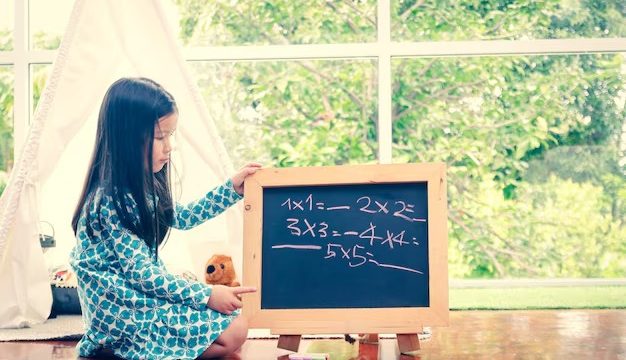
In our fast-paced world, where numbers and calculations often feel like a burden, discovering the beauty of patterns in arithmetic can be a refreshing and enlightening journey.
Arithmetic, in its essence, is not just about calculations; it holds a rhythm and harmony that can resonate deeply with our everyday lives.
By exploring these patterns, we can cultivate a sense of balance and appreciation for the simple yet profound structures that govern our numerical universe.
Finding joy in numbers
Many of us have memories of sitting in classrooms, grappling with equations and formulas. Often, we see arithmetic as a series of tedious tasks—adding, subtracting, multiplying, and dividing. Yet, when we pause to explore the underlying patterns, we can transform our relationship with numbers. Just like nature, which is filled with patterns—think of the spirals of a seashell or the symmetry of a snowflake—arithmetic offers its unique beauty.
Consider the humble addition of whole numbers. When we add consecutive integers, a fascinating pattern emerges. For example, 1 + 2 equals 3, while 2 + 3 equals 5, and 3 + 4 equals 7. If we take a moment to note these results, we might discover that the sums are always odd numbers: 3, 5, 7, and so forth. This simple observation can be a delightful reminder of how interconnected numbers can be, inviting us to look closer and appreciate the elegance hidden within arithmetic.
A small shift toward balance
As we delve deeper into the world of arithmetic, we may stumble upon the concept of sequences. A sequence is simply a list of numbers that follow a particular pattern. One of the most famous sequences is the Fibonacci sequence, where each number is the sum of the two preceding ones. Starting with 0 and 1, the sequence unfolds as 0, 1, 1, 2, 3, 5, 8, 13, and so on. This pattern is not just a mathematical curiosity; it appears in nature, from the arrangement of leaves on a stem to the branching of trees. Recognizing such connections can inspire a sense of wonder and appreciation for the harmony that exists between mathematics and the world around us.
Exploring relationships
Patterns in arithmetic also extend to relationships between numbers. Take, for instance, the concept of even and odd numbers. The interplay between these two categories creates a rhythm that can be both predictable and surprising. When we add an even number to another even number, the result is always even. The same applies to odd numbers. However, when we mix the two, the outcome is an odd number. This simple rule can serve as a gentle reminder of how balance and contrast coexist in life. Just as we experience highs and lows, joy and sorrow, even and odd numbers dance together, creating a tapestry of experiences.
Engaging with patterns
To engage with these patterns, consider incorporating simple arithmetic explorations into your daily routine. This could be as easy as observing the patterns in your surroundings. For instance, when you go for a walk, notice the symmetry in architecture or the rhythmic arrangement of flowers in a garden. These reflections can create a deeper appreciation for the mathematical principles at play in our everyday lives.
You might also enjoy playing with numbers in a more hands-on way. Try creating your own patterns using everyday objects like stones, leaves, or even your kitchen utensils. Group them in ways that reflect different arithmetic concepts. This tactile involvement can deepen your understanding and appreciation of the patterns and relationships that exist within arithmetic.
The art of mindfulness with numbers
As we embrace the patterns in arithmetic, we can also cultivate a mindful approach to our interactions with numbers. When faced with calculations, instead of feeling overwhelmed, take a moment to breathe and center yourself. Approach each problem with curiosity, much like an artist approaching a blank canvas. Allow yourself to explore the possibilities without the pressure of immediate answers. This shift in perspective can transform arithmetic from a daunting task into an engaging exploration.
Incorporating mindfulness into our arithmetic practice invites us to slow down, observe, and appreciate the beauty of numbers. It encourages us to approach challenges with a sense of wonder rather than anxiety. In doing so, we may find that math becomes a source of joy rather than a chore.
A journey of discovery
Ultimately, discovering patterns in arithmetic is more than just a mathematical exercise; it’s a journey of self-discovery. As we explore the connections and relationships between numbers, we may find reflections of our own lives. The patterns we uncover can serve as metaphors for the rhythms we experience daily—whether in our relationships, work, or personal growth.
As you continue to explore the world of arithmetic, remember that every step you take is part of a larger journey. Embrace the beauty of numbers and the patterns they reveal. Allow arithmetic to be a source of inspiration, a reminder of the interconnectedness of all things. In this way, you can cultivate a deeper appreciation for the simple yet profound structures that shape our lives.
In a world that often rushes past the nuances of daily existence, taking the time to discover and reflect on the patterns in arithmetic can offer a gentle pause. It invites us to find balance, beauty, and meaning in the numbers that surround us. By embracing this journey, we can enrich our lives and deepen our understanding of the world, one number at a time.